You see “DDS” in a hospital chat, a dentist’s name, or even on a medical form. Then you pause. Is it a degree? A condition? Or something technical doctors use?
This confusion is very common because “DDS” is used in more than one medical context. Most people search it after seeing it on prescriptions, clinic signs, or online health discussions and not understanding what it really means.
In simple terms, DDS is mainly connected to dentistry, but it can also appear in other medical and technical systems. The meaning changes depending on where and how it is used.
In this guide, you will get a clear, simple explanation of “DDS meaning medical,” how professionals use it, and how to understand it instantly in real life.
No confusion. No technical overload. Just clean, easy clarity you can actually use.
What Does “DDS Meaning Medical” Mean in Text?
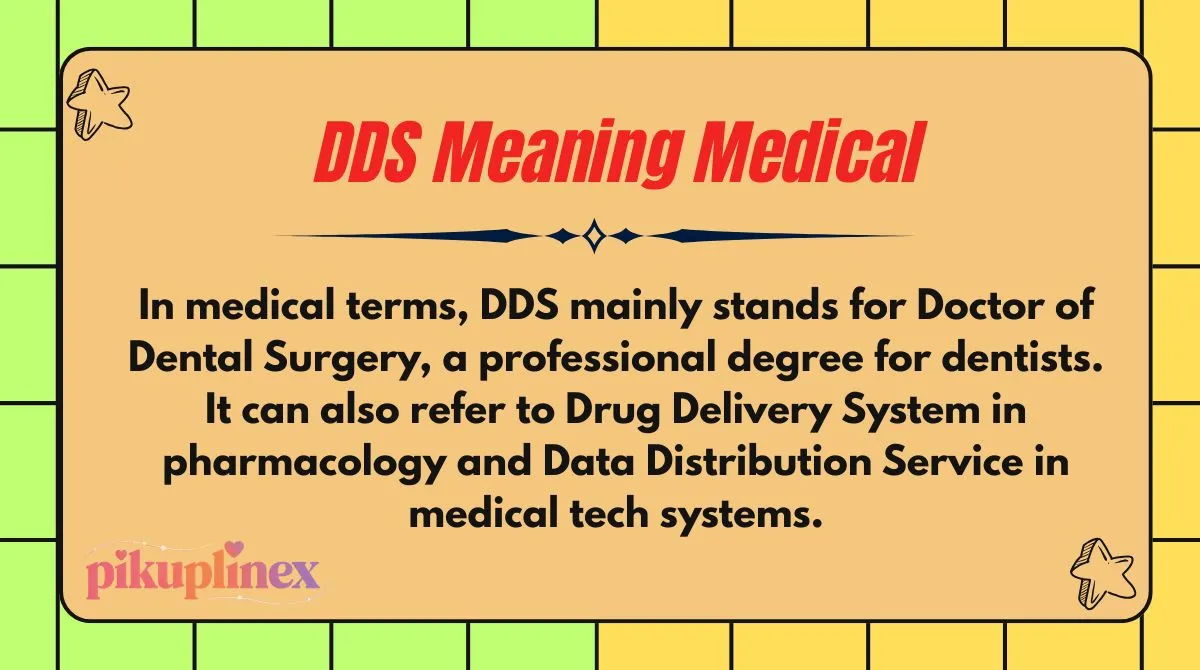
In medical terms, DDS mainly stands for Doctor of Dental Surgery, a professional degree for dentists. It can also refer to Drug Delivery System in pharmacology and Data Distribution Service in medical tech systems. The meaning depends on context, especially in hospitals, labs, or online discussions.
Most commonly, DDS refers to dentistry qualifications.
The Most Common Meanings of “DDS Meaning Medical”
1. Doctor of Dental Surgery (Most Common Meaning)
This is the #1 meaning in healthcare settings.
A DDS is a licensed dentist who has completed a dental degree. They diagnose and treat issues related to teeth, gums, and mouth health.
Where you see it:
- Dentist name boards (e.g., Dr. Ahmed Khan, DDS)
- Dental clinic certificates
- Medical prescriptions from dentists
Example:
- “Dr. Sara Ali, DDS, will see you at 4 PM.”
This is the most widely accepted meaning globally.
2. Drug Delivery System (Medical Science Meaning)
In medical research and pharmacology, DDS stands for Drug Delivery System.
This refers to how medicine is delivered inside the human body. It focuses on improving how drugs reach specific organs or tissues.
Where it is used:
- Pharmaceutical research papers
- Hospital treatment planning
- Clinical trials
Example:
- “The new DDS improves targeted cancer treatment.”
This meaning is technical and used mostly by scientists and doctors.
3. Data Distribution Service (Medical Technology Context)
In modern healthcare tech systems, DDS can also mean Data Distribution Service.
It is used in hospital software systems where patient data is shared across systems in real time.
Where it appears:
- Hospital IT systems
- Medical software architecture
- Health data networks
Example:
- “DDS ensures real-time patient monitoring data flow.”
This is not about medicine directly, but about healthcare technology.
How “DDS” Is Used in Real Conversations
Friends & Casual Talking
In normal daily talk, people rarely use DDS. But when they do, it usually relates to dentist visits.
Example:
- “I’m going to a DDS appointment today.”
Here, it simply means dentist.
Instagram & Snapchat
On social media, DDS may appear in:
- Dentist clinic pages
- Medical student bios
- Appointment reminders
Example caption:
- “Finally became DDS certified!”
It is mostly used in professional achievement posts.
Dating Apps
DDS is almost never used in dating chats. But if it appears, it is usually in bio sections of dentists.
Example:
- “DDS | Coffee lover | Traveler”
Here, it adds professional identity.
Gaming & Online Communities
DDS is not a gaming slang term. But confusion happens because gamers sometimes mistake it for abbreviations like DPS.
So in gaming chats:
- DDS is usually ignored or misread
Work or Professional Chat
In healthcare workplaces, DDS is very common.
Used in:
- Dental clinics
- Hospital systems
- Medical billing documents
Example:
- “Schedule follow-up with DDS specialist.”
It shows professional dental qualification or technical system.
Is “DDS” Rude, Flirty, or Offensive?
DDS is completely neutral.
It is not slang, not rude, and not flirty.
Tone Analysis:
- Professional: Yes (medical use)
- Casual: Sometimes (dentist talk)
- Emotional meaning: None
When it feels positive:
- When used to show medical qualification
- When used in professional introductions
When it feels negative:
- Only when misunderstood as something else
- Or when people confuse it with unrelated slang
Overall, DDS is safe and formal.
How to Respond When Someone Says “DDS”
Your response depends on context.
Casual Replies
- “Oh, you mean dentist?”
- “Nice, dental doctor?”
Funny Replies
- “So my teeth are in good hands then?”
- “No more fear of cavities!”
Neutral Replies
- “Got it, DDS means dental surgeon.”
- “Thanks for clarifying.”
Professional Replies
- “Understood. I’ll note the DDS consultation.”
- “Please proceed with DDS appointment scheduling.”
Common Misunderstandings About “DDS”
1. Thinking It’s a Disease
Some people think DDS is a medical condition. It is not.
It is a title or system term.
2. Confusing DDS with DMD
DDS and DMD are both dental degrees.
- DDS = Doctor of Dental Surgery
- DMD = Doctor of Medicine in Dentistry
They are equivalent in most countries.
3. Assuming It’s Internet Slang
DDS is not Gen Z slang like “LOL” or “FR.”
It is a professional abbreviation.
4. Mixing It with Tech Terms
Some people confuse DDS (Data Distribution Service) with medical treatment.
Context is key.
Similar Slang and Medical Terms You Should Know
- DMD – Dental degree similar to DDS
- MD – Medical doctor
- DO – Doctor of Osteopathic Medicine
- BDS – Bachelor of Dental Surgery
- GP – General physician
- RN – Registered nurse
- ICU – Intensive care unit
- OPD – Outpatient department
- Rx – Prescription
- OT – Operation theatre
- IV – Intravenous therapy
- BP – Blood pressure
These help you understand medical chats better.
When You Should Avoid Using “DDS”
1. Professional Non-Medical Settings
If you are not in healthcare, avoid using DDS incorrectly in business or office chats.
2. Cross-Cultural Chats
Some countries may not use DDS commonly. They may prefer “dentist” or “dental surgeon.”
3. Sensitive Situations
If someone is discussing serious health issues, avoid casual use of abbreviations like DDS.
Clear language is better.
FAQs
What does DDS mean in medical terms?
DDS mainly means Doctor of Dental Surgery, a professional dental degree.
Is DDS a doctor?
Yes, a DDS is a qualified dentist who can diagnose and treat oral health problems.
Is DDS and DMD the same?
Yes, DDS and DMD are equivalent dental degrees with different naming styles.
What is DDS in pharmacy?
In pharmacy, DDS means Drug Delivery System, which controls how medicine enters the body.
Is DDS a disease?
No, DDS is not a disease. It is a qualification or technical system term.
Can DDS prescribe medicine?
Yes, dentists with DDS can prescribe medication related to dental treatment.
Where do I see DDS used most?
You see DDS mostly on dentist name boards, clinic documents, and medical reports.
Final Thoughts
DDS is a simple term, but it becomes confusing because it has more than one meaning in medical and technical fields.
In most real-life situations, DDS refers to a dentist with a Doctor of Dental Surgery degree. In scientific and tech settings, it may refer to drug delivery systems or data systems.
Once you know the context, DDS becomes very easy to understand. Instead of guessing, just check where it appears—clinic, research paper, or software system.
Understanding terms like DDS helps you read medical information with confidence and avoid confusion in chats, reports, and online content.